A good credit card for a bad credit score
Join over 4 million people approved for the Capital One Classic Card.
No impact on your credit score
34.9% APR representative variable. Not using your card responsibly could hurt your credit rating, making it harder to get credit in future.
Can I get a credit card with bad credit or a low credit score?
Yes, you can. Capital One specialises in credit cards for bad credit - whether you’ve got a poor credit score or no credit history at all. Credit cards for low credit can be a great tool for turning things around and starting to build a positive credit history.
Your score might be low because...
You’ve missed payments in the past
Previous missed payments may have caused your credit score to drop. And if you’re rebuilding after a Default or CCJ, turning things around can take quite a bit longer.
You’re new to credit or the UK
If you’ve never had a credit card or you’re new to the UK, you might not have enough evidence on your credit file. This makes it hard for lenders to make a decision, or trust you can pay them back.
Remember, not using your card responsibly could hurt your credit rating, making it harder to get credit in future.

Why do lenders decline applications?
You might be declined for a credit card if a lender sees some instability or gaps in your credit history. Also, applying for multiple cards in a short space of time can reduce your chances of being accepted, even when applying for bad credit credit cards.
No need to worry about that with us. Our QuickCheck tool uses a soft search that lets you see if you’ll be accepted for a card before you apply, without adding a mark to your credit report.
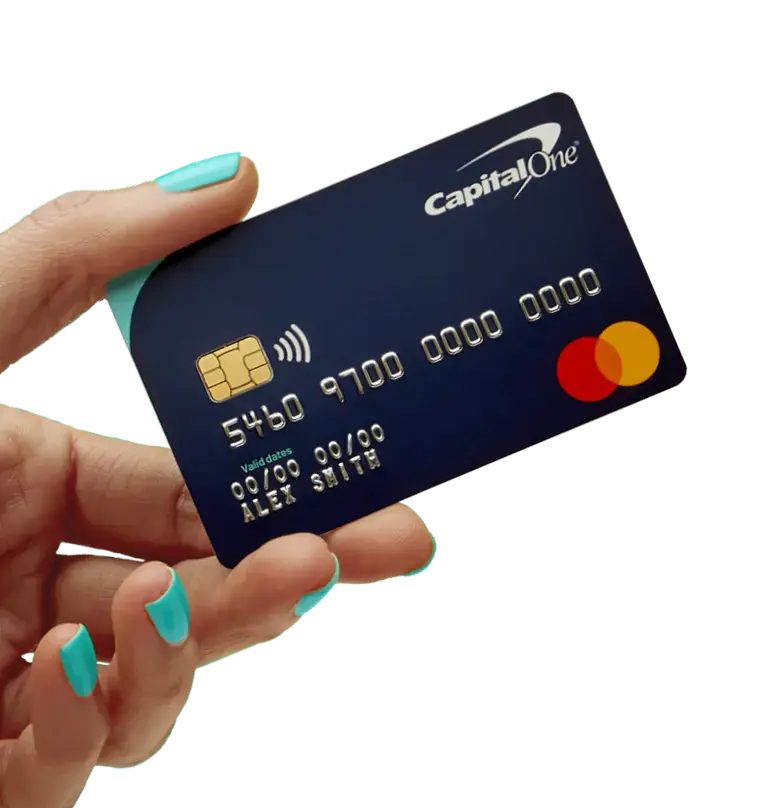
The Classic Card
Our most popular card with over 4 million people accepted.
- Build your credit score over time
- Know if you're accepted before you apply
- Manageable credit limits starting from £200
Here to help you rebuild your credit file
Using a credit card for bad credit can help improve your credit score over time, if you manage it responsibly. Here are some of the ways bad credit credit cards can help:
Start with a manageable credit limit
Starting off with a manageable limit helps keep your credit utilisation low and avoid overspending, which makes it easier for you to stay in control.Build a reliable payment history
Each of your payments is reported to Experian, Equifax and TransUnion, helping to balance out negative past marks and build a more positive history.
No impact on your credit score
FAQs
Can I get pre-approved if I have past CCJs, defaults, or missed payments?
Often, yes. Having problems with credit in the past doesn’t automatically mean you’ll be declined, but it might be taken into consideration if you’ve had a CCJ or defaulted account within the last 6 years.
We look at your current income and overall affordability, not just your credit score. Even if you’ve struggled with credit in the past, try a QuickCheck to see if you’re pre-approved before you make a full application.
Can I get a credit card after an IVA or a Debt Management Plan?
It’s possible once your IVA (Individual Voluntary Arrangement) or Debt Management Plan is complete. Rebuilding from there is about active, responsible account management, and the Capital One Classic Card gives you a structured way to do exactly that.
What happens if I’m not eligible today?
You won’t be left in the dark. Unlike many lenders, if we can’t offer you a card today, we’ll explain how we made that decision, and point you towards what you can do next. A ‘no’ now doesn’t mean a ‘no’ forever.
What is bad credit, and what counts as a low credit score in the UK?
Your credit score is a snapshot of your credit health. A ‘bad’ or low score often just means you’re new to credit, or rebuilding after some difficulty. When you apply for a card (including credit cards for low credit), lenders check your credit file for a healthy track record of on-time payments. A low score can limit your options, but the good news is it can be improved with time and the right habits.
Can a credit card actually help me repair bad credit?
Used responsibly, yes. Making your payments to your bad credit credit card on time and staying well within your credit limit shows UK credit reference agencies you can borrow responsibly, which helps rebuild your score over time. Credit cards for poor credit won’t automatically fix your score – it’s how you use them that counts.
How do I turn a bad credit score into a good one?
A few consistent habits make the biggest difference: make payments on time, keep your credit utilisation low, space out applications, and always use an eligibility checker before applying for credit cards for low credit. Small, steady, on-time activity is what rebuilds a score.
Why Capital One for bad credit credit cards?
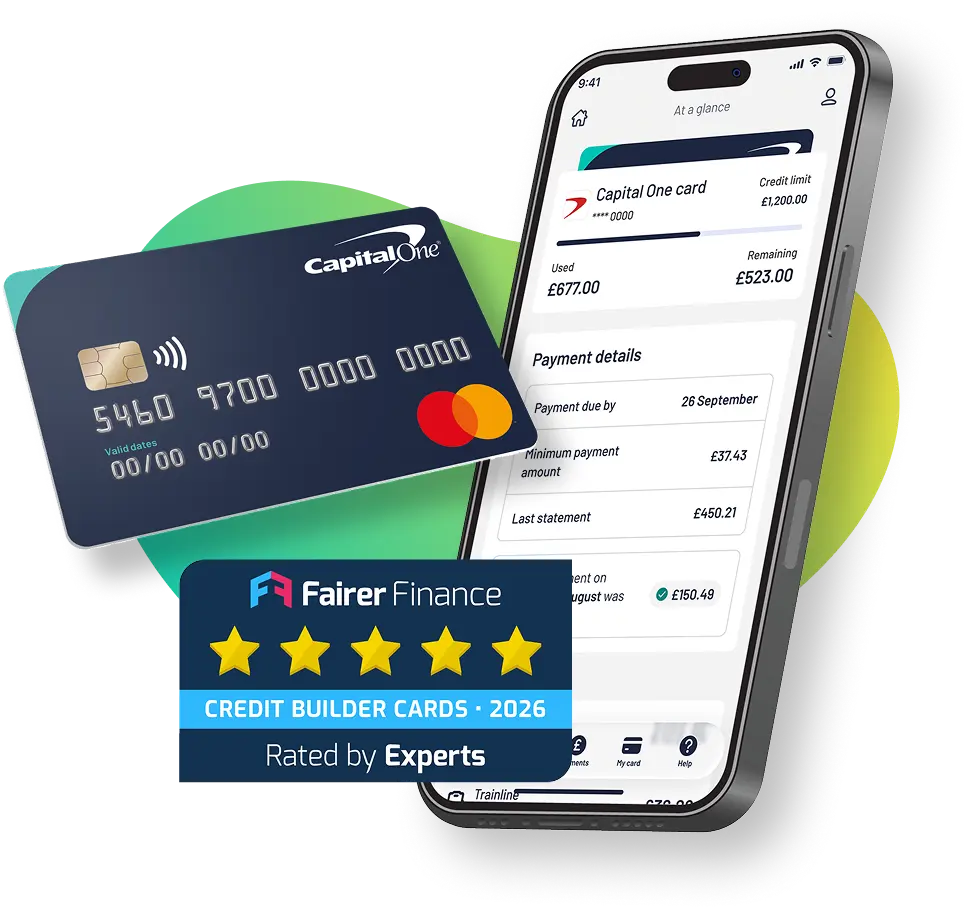
Check if you’re eligible before applying
See if it’s a “yes” or “no” in about 60 seconds, with no impact on your credit score.
No yearly fees or nasty surprises
What you see is what you get. We’ll never charge you an annual fee, plus the APR you’re offered is always the one you’ll get.
Extra protection on purchases
Purchases over £100 (like a big shop or birthday presents) are legally covered by what’s called Section 75. That means if something goes wrong, you could get the money back.
34.9% APR representative variable
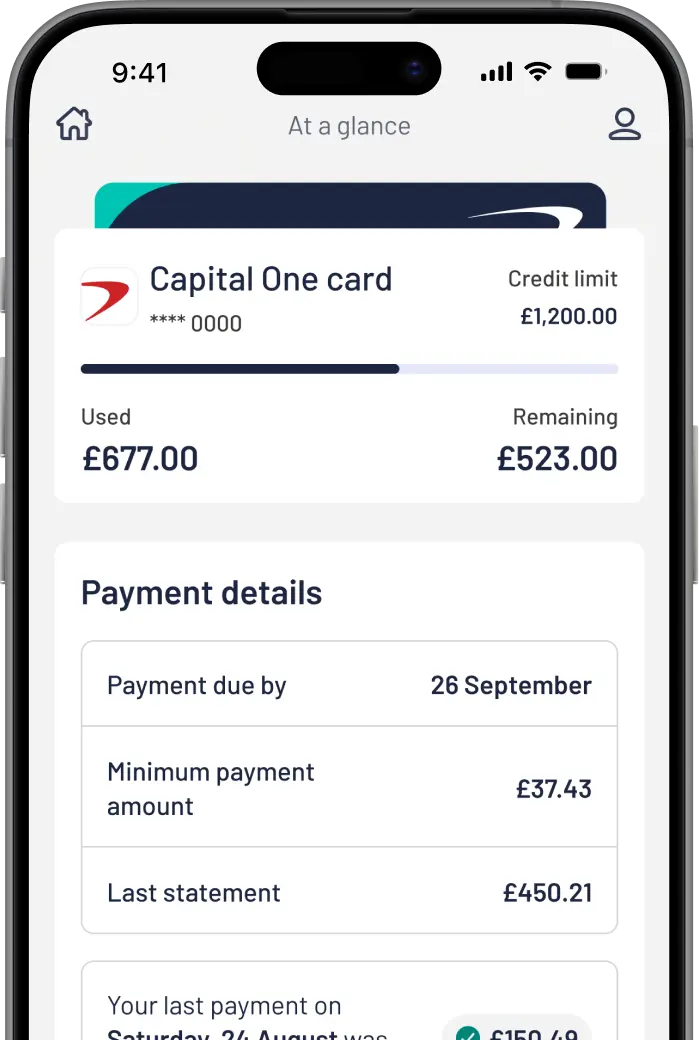
See if you’re eligible for a bad credit credit card
It only takes a few minutes and won’t impact your credit score.
Tell us about yourself
Fill in a few details and we’ll let you know if you’re eligible, without affecting your credit score.Get a straight yes or no
We’ll tell you if you’ll be accepted on the spot, so you can decide if you want to apply.Apply for your card
If you’re eligible and you think the card’s right for you, you can apply in one tap of a button.
No impact on your credit score
Representative example: Assuming a credit limit of £1,200 and an interest rate on purchases of 34.94% p.a. variable, you will receive a 34.9% APR representative variable.
Credit card blogs

What can affect your credit score?
Get a better understanding of the actions that can help and hurt your credit score with this Capital One UK guide.

What is a credit check?
Credit checks are a routine part of applying for financial products and services in the UK. Find out everything you need to know.
The impact of missed and late payments
Does a late payment on your credit card affect your credit score? Read our handy guide to find out.